Tag: Textured

  • Top Tips for Finding a Hairstylist in a New Town

    Top Tips for Finding a Hairstylist in a New Town

    Moving to a new town can be overwhelming. You do not know anyone yet. You’re trying to figure out where you can go to get the best results for your hair texture. You don’t even know where to start and you really don’t want your hair to suffer.  

    —Where to look—

    You need not to worry because there are ways to find a hairstylist in your area. You just need to do your due diligence. Below is a list of tips to help you find the perfect hair stylist for you. These tips work no matter your location or budget.

    1. Referrals

    Ask for referrals. Maybe you are a college student or you just transferred to a new state or city because of your job. Ask your fellow classmates or co-workers if they know of someone who can help you achieve your hair goals. Most do or they can find out and point you in the right direction.

    a woman looking at the laptop
    Photo by PNW Production on Pexels.com

    2. Social Media

    Check Social Media. Now a days everything is on social media. You can easily log in to Instagram, Facebook, and TikTok to find a hair stylist near you. Be cautious when looking on social media. You might find a person who really doesn’t know what they are doing. Or, you might find someone who is scamming people out of their deposit money. Make sure you look through their photos and ask questions. You want to make sure that they meet or exceed your expectations.

    3. Online Research

    Look up stylist in your area on the internet. Visiting sites like Google and booking sites like StyleSeat are good places to start. When you are searching on either site it will bring up a list of hair stylist near you. Now with this it is possible that the stylist no longer does hair or they have moved to another state. Make sure that you are calling before booking an appointment. 

    4. Reviews and Testimonials

    Make sure you are looking at any and all reviews and testimonials. If you go on their booking website you want and need to check the reviews and testimonials that are left. You can learn a lot about a stylist when you can read another person’s experience and viewpoint. Be mindful of everything that is said about the stylist. But, please form your own opinion at the end of the day.

    woman in yellow shirt holding black smartphone
    Photo by Ron Lach on Pexels.com

    5. Check their Portfolio

    Visit their websites or online portfolio. You want to visit any websites that they have that is relevant. Also visit any social media pages that they have as well. You want to pay attention to their photos of the styles they have done. Ask yourself if it meets your standards? Does the work look consistent? Are they improving with each style? 

    6. Schedule a Consultation

    Call or book on their website. Every hair stylist should be giving you a consultation no matter what and at every appointment. A consultation is how stylist get to know you and your hair. Most times a consultation is free, but some charge. Yet, this is an important step when finding a new stylist.

    7. Questions

    Ask questions. I know I have mentioned this already, but you need to make sure that you are asking questions. Don’t be afraid to do so. You are entitled to ask any questions that will help you chose them as your stylist.

    Some examples would be:

    • How long have you been a natural hair stylist?
    • Do you have any relevant licenses or certificates? *All licenses or certificates should be posted in the salon next to their station with a current picture of them. THIS IS A REQUIREMENT FOR EVERY STATE!!!

    You also want to ask any questions relevant to the service.

    Some examples would be:

    • Will I need to buy the hair?
    • Will I need to come washed and blow-dried? *If they say yes to this question do not get discouraged or upset. They might ask you to do this because their state legally prohibits them from providing this service. It will result in a fine for the stylist and they could lose their license.

    8. Communication

    Are they communicating with you effectively. Pay attention to their communication skills. Are they giving you feedback during your consultation? Are they giving you step-by-step instructions on how they plan to execute the style? Are they telling you which products they are using and why? They should repeat back exactly what you want. This is how we can keep the confusion down.  

    9. Salon Environment 

    Evaluate the salon environment. Look around the salon and ensure that it is clean. Don’t be afraid to go and visit the bathroom while on the salon premises. Also you want to make sure that your stylist looks neat and professional. 

    a row of black leather shampoo beds in a salon
    Photo by Max Vakhtbovych on Pexels.com

    10. Pricing 

    Always check pricing. If you are visiting a stylist booking site and it say pricing varies, call and get a quote. You want to make sure that where ever you go they are in your budget range. Make sure you check for any add on fees that are acquired for late arrivals, no shows, deposits. The last thing you want is to schedule an appointment without enough money for the style. You also don’t want to be surprised about the total cost. 

    Conclusion

    Finding someone who you can trust to do your hair can be stressful. By using the tips I have listed, should take some of the stress away. Remember you should be conducting interviews with your hair stylist. They are trying to get a job (work on your hair). It should be an honor to do your hair and you should not play about who does it. Be thorough in your search and good luck!

    Please follow us on TikTok @prettyandtextured and on Pinterest @PrettyTexturedbyPorschaT

  • Tackling Traction Alopecia: A Community Approach

    Tackling Traction Alopecia: A Community Approach

    woman wearing a white spaghetti strap top
    Photo by Ron Lach on Pexels.com

    It took a while for me to get this post up because I knew this would probably ruffle some feathers. But, we need to talk about it. I am seeing a crazy lack of education in our stylist community. Sometimes simple research will answer your questions. Even just asking the question can help some of us. We have to stop being afraid to speak up.

    So, today I am doing that and we are going to talk about traction alopecia. Collectively we all play a part in how traction alopecia comes to. From the at home maintenance and styling to even the beauticians in the salons.

    The end goal should be to come together to reverse the condition, because it can be reversed. But first we have to acknowledge that we all play a role.


    What is Traction Alopecia

    Traction Alopecia is a temporary hair loss disorder that is caused by the constant pulling of a person’s hair. One sign of traction alopecia will be that your hairline starts to thin.

    As a beautician you want to be mindful of how tight you are pulling someone’s hair. If you see a client’s hair is thinning, educate them. Help them find a more protective route for their hair. This is where you and the client sit down and create a hair treatment plan.

    We have to start prioritizing hair health over money!

    As a client if you see that your hair is thinning, speak up to your beautician. Or take the route to look for help from a dermatologist. A dermatologist can pin point exactly what’s wrong and put you on a regimen to fix the issue.

    Also if you are a person who doesn’t go to the salon for any reason. More than likely the way you are styling your hair can be the issue.

    Remember traction alopecia comes from the constant pulling of your hair. Below is a list of styles that can lead to traction alopecia.


    Hairstyles that lead to Traction Alopecia

    1. Buns
    2. Ponytails
    3. Braids and Locs
    4. Weaves and Extensions

    Basically all and any tightly pulled up-dos!

    With braids, extensions, and weaves as your hair grows, it applies extra weight on the new growth. This can also lead to the thinning in your hair. It is extremely important to only leave hairstyles up for the recommended time frame. And beauticians you need to know approximately how long a hairstyle should last.

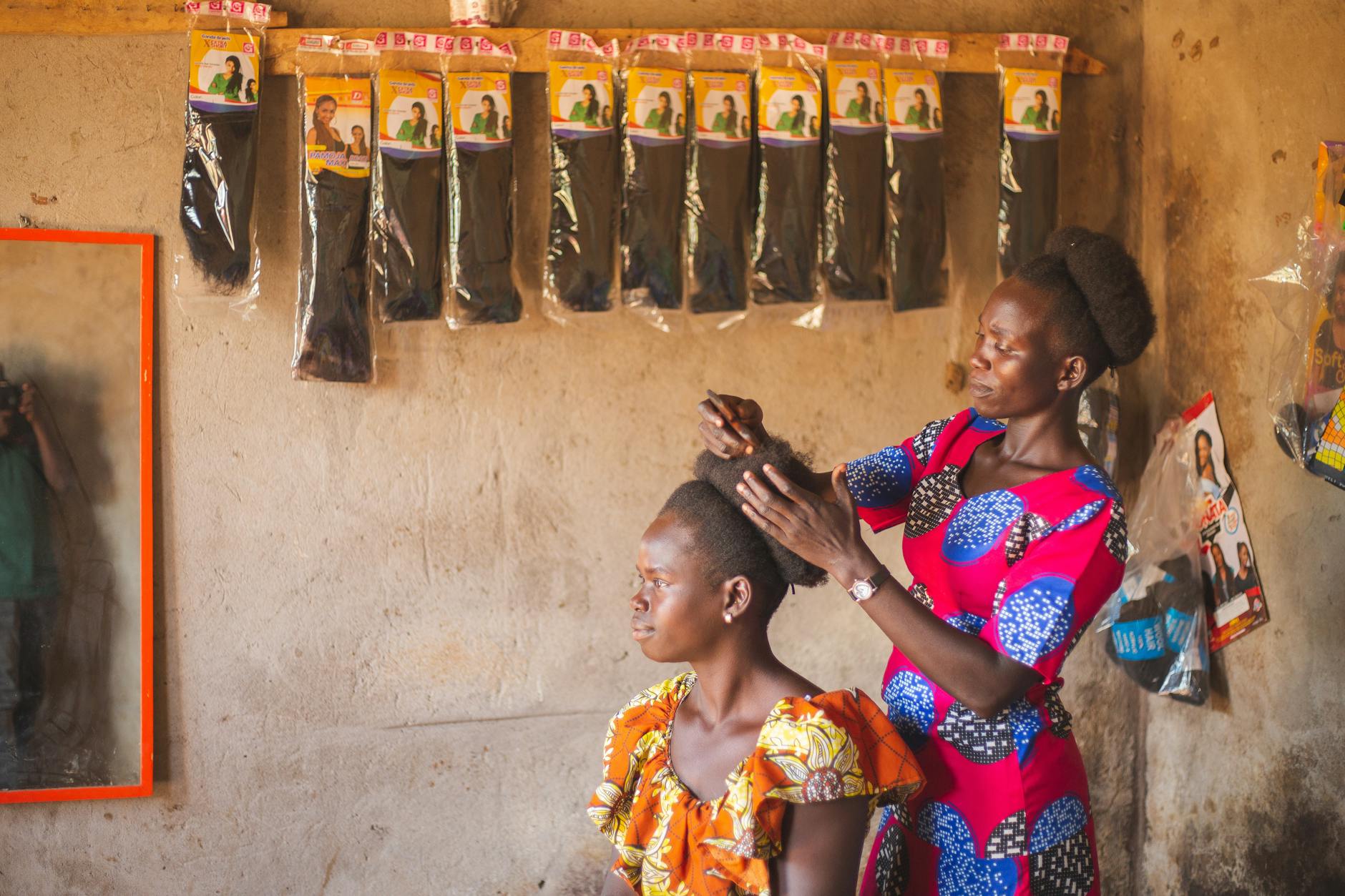
    hairdresser in africa making a hair extension
    Photo by illustrate Digital Ug on Pexels.com

    Prevention Techniques

    There are some simple and easy ways to prevent traction alopecia.

    1. You can avoid the hairstyles altogether. The best recommendation that I can give you is to cut out the tight hairstyles for awhile. Allow your hair the time to get its strength back.
    2. Change up hairstyles on the regular. Have you ever heard someone say “she has a new hairstyle every day or week?” You need to be that person! Plus, okay money!
    3. If you experience any style that is uncomfortable. If your head hurts or turns red, take it down. If you see bumps anywhere that wasn’t there before, take it down. If you are just purely uncomfortable, TAKE IT DOWN! It is not worth the risk and your edges will thank you.

    Be mindful of the hairstyles you are wearing. Check if they are too tight. Pay attention to what you wear on your head, like hats and scarves. They can also cause traction alopecia (reason why bonnets are important).

    Conclusion

    Although I am a licensed cosmetologist, I consider myself a professional braider. I am a professional braider who prioritizes healthy hair over everything. Please don’t risk your hair health for a cute hairstyle if it is causing pain. Please take your braids down before 8 weeks.

    If you feel like you tried everything, call a dermatologist. They can help!

    Follow Us @prettyandtextured on TikTok

  • My Natural Hair Journey: Founder’s Story

    My Natural Hair Journey: Founder’s Story

    Growing up I always heard stories of how I was the cutest little bald- headed baby my mom had ever seen. That was until my oldest daughter was born. Then she was the cutest.

    Back to the story. She would always talk about how people would think I was a little boy cause I didn’t have bows and barrettes in. The reason for that is because they had no hair to hold onto. And I still don’t understand that because she always had me in dresses, pink, and ruffles. There are lots of ruffles in my pictures.

    Hearing how I never really had hair gave me somewhat of a hair trauma. I wouldn’t get my hair cut because I felt my hair never grew. I didn’t really understand that what I was doing to my hair was the reason it seemed like it didn’t grow.

    As time went on I learned what products were best to use, how to properly execute hairstyles, and I feel in love with braids. I started practicing doing hair on myself, my sisters, mom, and grandma. I know what you are thinking, but Porscha this is suppose to be a story about your hair journey? And you’re right it is, so let’s get into this story.

    My First Natural Journey

    My true hair journey started when the black community went on an all natural strike. Every girl and woman around me was cutting their hair off and regrowing it out so that they could see their true hair texture. They dub this the “Big Chop” era. Then women slowly started just transitioning because to most women that was better than chopping off all your hair at one time.

    The first time I decided to go natural, I transitioned. Or at least attempted too. I didn’t like it and ultimately put a relaxer on my hair. Which you guessed it made my situation worse because now instead of dealing with 2 (two) different textures, I had to deal with one unruly and stringy texture.

    I knew I needed to change something and I needed to do it fast. I wanted to grow my hair long and I wanted it to grow faster. So then I started trying every fast growing hair product I could find. Some worked for a while then my hair started falling out. For the next few years I just wore braids and sew ins, but you guessed it I put a relaxer on around 3 (three) days later.

    However I still refused to let my hair be trimmed or cut. I felt I was seeing results in my hair growth. I was but everything else was starting to slowly break off.

    My Second Natural Journey

    The next time I decided I would take my natural hair journey serious was when I started going to cosmetology school. At first I wasn’t planning on going natural. I just wanted to get my hair back to a healthy state. I felt like being in school was giving me a new found hair confidence.

    Little did I realize I would eventually destroy my hair.

    What happened?

    One day I decided that I wanted to bleach my hair. It was in its natural state and I hadn’t put any color on it in months. But I wanted to go to a lighter brown color and I needed to bleach my hair to achieve it.

    Since I was in school I felt like I was in safe hands (I was what ended up happening was my fault). The girl who ended up bleaching my hair did a great job and I was very happy with the results. Especially once we added the color to my hair the next day.

    Fast forward I believe a week or two, I wanted finger waves and the finger waves wasn’t waving the way they needed to. So what did I do you ask. I put on a relaxer, not thinking nothing about the fact that I had just bleached my hair. I went to school the next day and ultimately we had to cut my hair off.

    I can laugh about it today but that day I was so disappointed in myself because I KNEW BETTER! Never-the-less it was a learning experience and now I got to start over with the knowledge of a hairstylist.

    How it’s going

    Right now I am proud of where my journey has taken me. I have learned so much about my own curl pattern and porosity level. There are days where I myself want to put on a relaxer, but then I think about how much I love my curls and ultimately decide against it.

    My curls have given me a new found confidence that I didn’t realize I needed. I love being able to say that once I learned how to care for my hair, that I am now able to teach others.

    Once I learned that an established routine is needed regardless of the texture of your hair, I was unstoppable. My curls have flourished and although the shrinkage is real, so is my growth.

    I hope this gives you the courage to keep going in your hair journey. Whether you are a naturalista or a relaxer girly, taking care of your hair is a must. My story is like so many others but all of our journeys and outcomes will be different.

  • Winter Hair Care Tips for Natural Hair

    Winter Hair Care Tips for Natural Hair

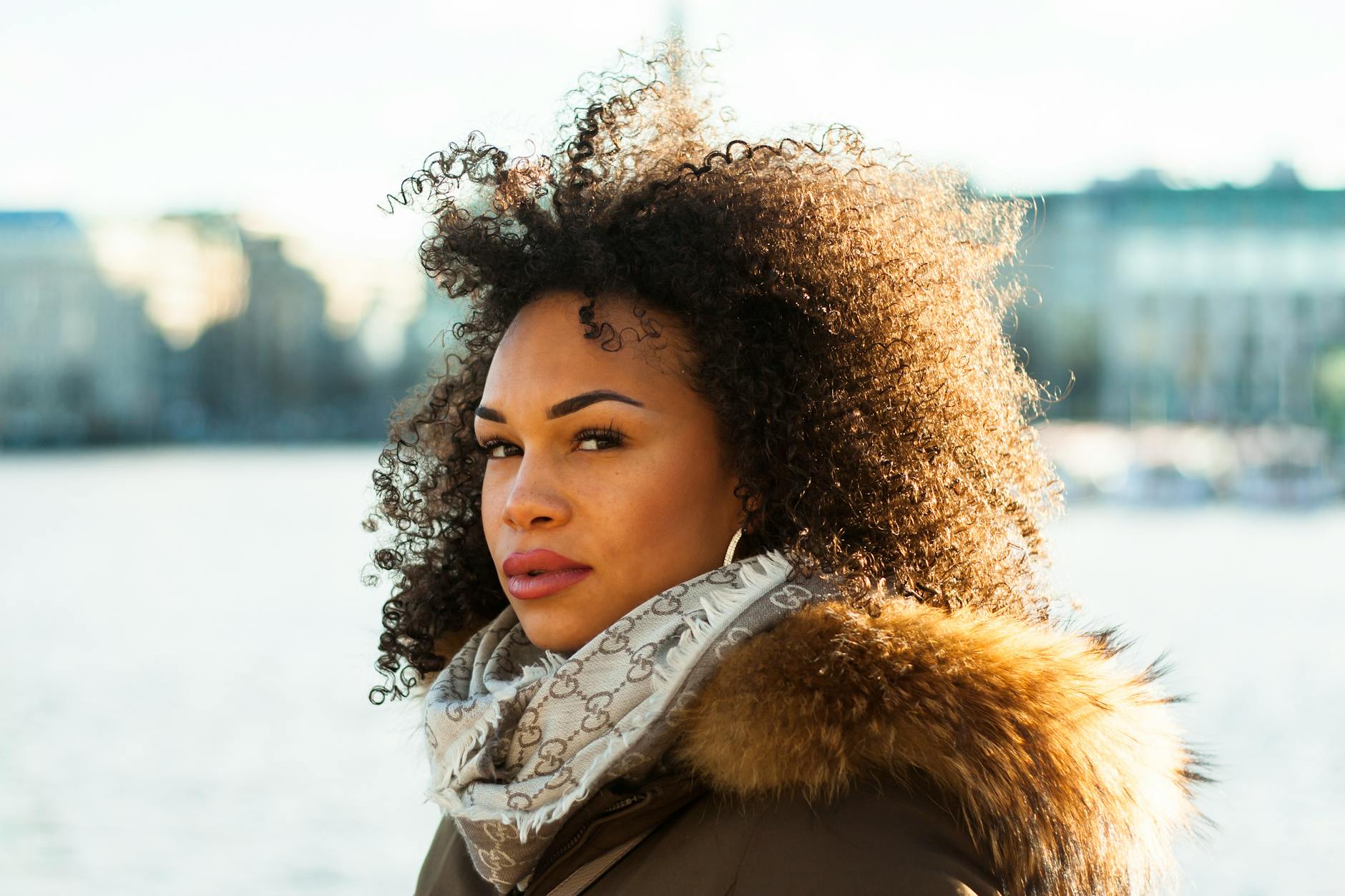
    woman wearing black and brown coat
    Photo by Sebastian Libuda on Pexels.com

    Winter is my favorite season! Mainly because it gives me a reason to wear my oversize hoodie and my favorite sweaters. It also gives me a reason to really just throw on a hat and go. Winter is just cozy to me. For my hair on the other hand, not so much.

    During the winter time our hair tends to dry out and become brittle. When you are first learning to love your curls this can be frustrating. Especially, if it’s your first winter with your natural hair. Don’t worry though, I got you. We are going to get through this together. But first let’s talk about the mistakes most naturalists make during the winter time.


    1. Not Moisturizing.

    Not moisturizing enough is the main mistake I see clients make. Making sure your hair stays moisturized helps to keep your hair from breaking off. If you have not started utilizing the L.O.C. Method, start. This method helps you LOCK moisture into your hair.

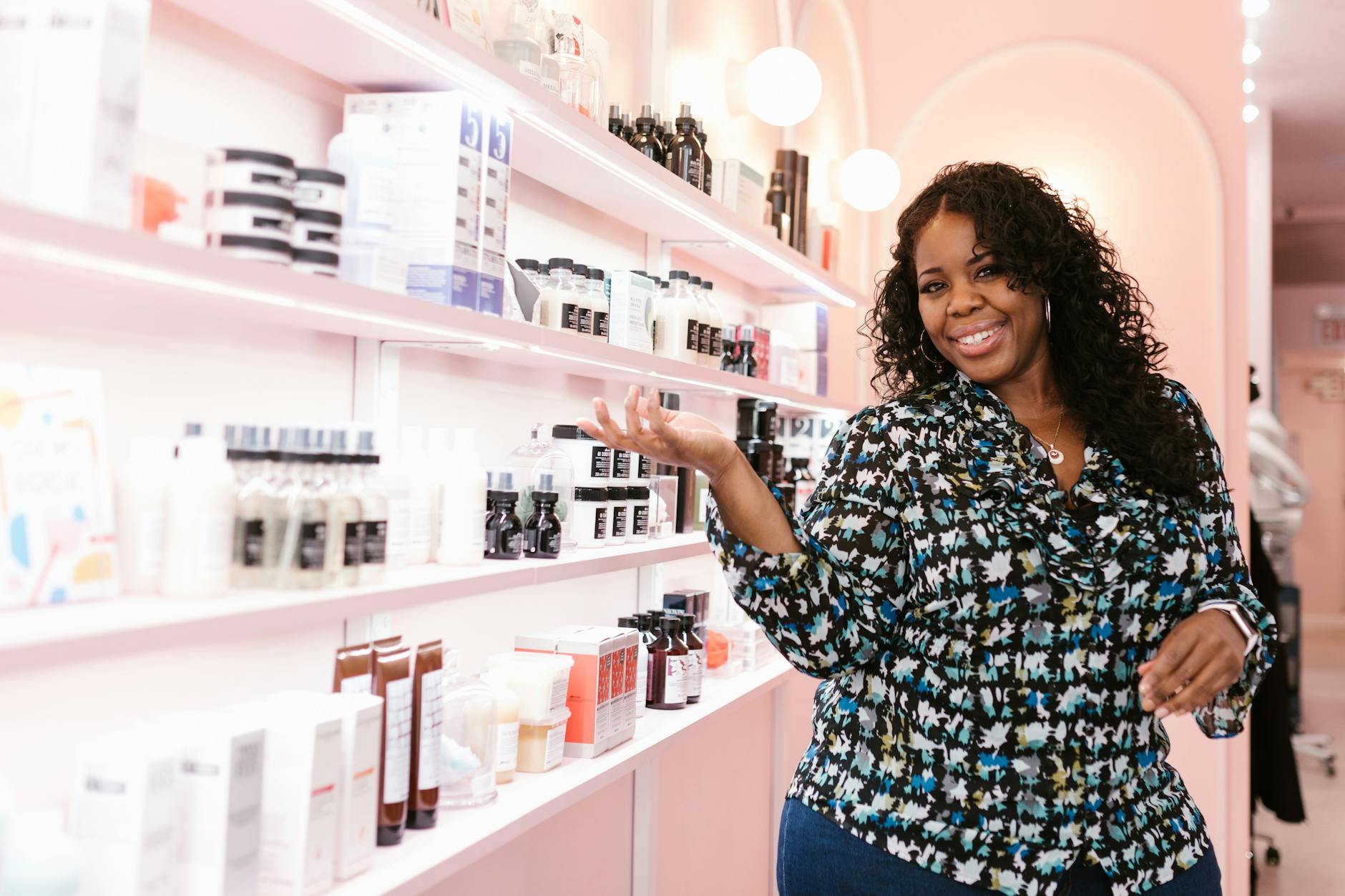
    a beautiful woman posing beside a shelf with assorted beauty products
    Photo by RDNE Stock project on Pexels.com

    2. Not Protecting Your Hair.

    Not protecting your hair during any time is a no-no in my book. You should already be incorporating protective styles into your routine. And you should definitely be protecting your hair at night. When it comes to your protective styles try to wear twist-outs or even braids. When it comes to what you do at night, you need to create a routine. You also need to make sure that you are wearing a silk or satin bonnet to sleep and that you have a silk or satin pillowcase.

    3. Excessive Heat Use.

    This is another no-no in my book no matter what. I know that because it is winter and silk presses last longer, most people tend to go over board. You don’t want to overly use heat tools on your hair anytime. This causes damage. Opt for using your heat tools and then wrapping your hair at night to make your silk press last without applying additional heat.

    4. Wearing Protective Styles Too Long.

    When you put your hair up in a protective style there are usually unspoken rules of how long it should stay up. Honestly I always tell my clients to leave their hair up for a minimum of 4 weeks and a maximum of 8 weeks. Leaving your style up too long can sometimes cause issues like matting.

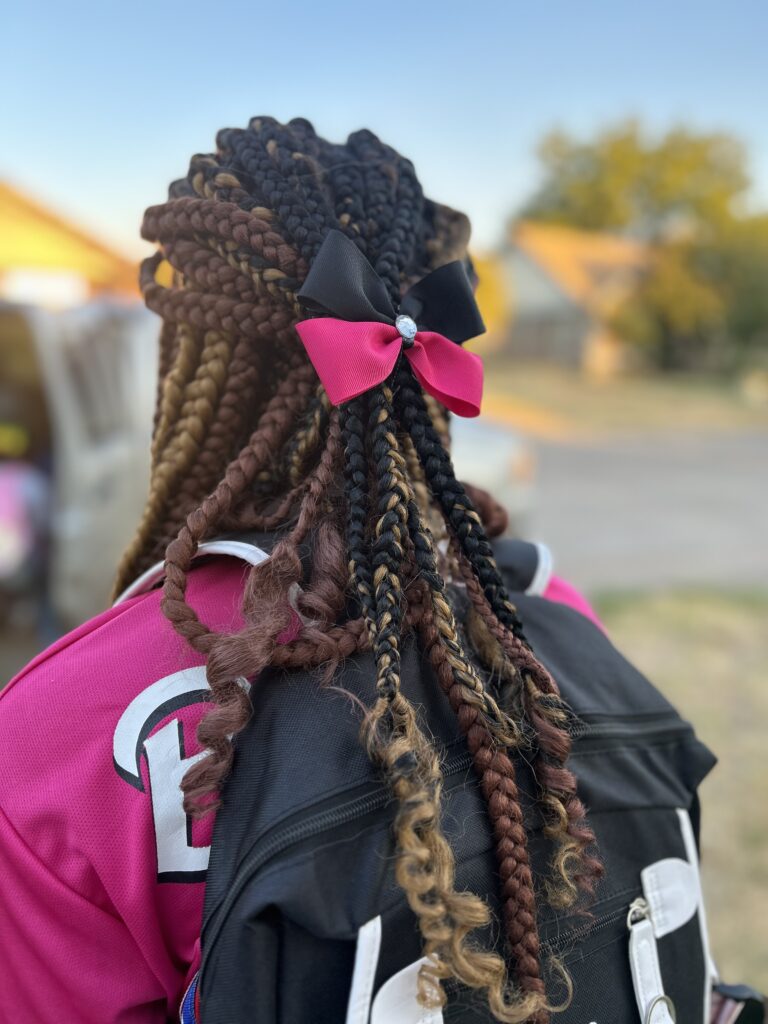
    Multicolored box braids styled with pink/black bow by Porscha Teraz
    Photo taken by Porscha T

    5. Using the wrong products.

    The products you use is everything. Using the wrong type of products for what your hair needs is not good. You want to make sure you are listening to your hair and watching how it responds to the products you are using. Remember your products should change depending on the style you are wearing and the needs of your hair. If your hair is dry use heavy moisturizing products.


    In my opinion the winter time should be when your hair flourishes. For me this is the time that I try to make sure that I am only wearing protective styles. I make sure that I am moisturizing and a rule of mine is if I ask myself “Have I conditioned my hair this week?” Then that means I probably didn’t and need to.

    Ultimately you will be and are your hair’s biggest enemy. You set the environment for your hair to thrive. Yes, the weather and the elements play apart in your hair’s health, but so does the food you eat and the products you use.


    Winter Fixes: Things you can do for better hair health

    1. Water In-take. Drink more water. You should be drinking water everyday.
    2. Deep Condition. Deep condition your hair weekly. In the winter I recommend doing this twice a week, but please do what you feel is best for your hair.
    3. Silk or Satin. Use silk or satin hats to protect your hair when out in the cold. Sleep on a silk or satin pillow case. Wear a silk or satin bonnet. Invest in silk or satin hair ties for ponytails, braids, etc.
    4. Protective Styles. Wear protective hairstyles. Remember do not wear them too long.
    5. Products. Now I say that because winter is drying you should go for heavier butters and oils. But it all depends on your hair. Just make sure you are using the correct products for your hair needs.

    You Define Your Curls!

    Follow us on TikTok @prettyandtextured

    We share BTS, Tips, and now TUTORIALS!

    Share your hair care journey stories in the comments.

  • Hello Pretty & Textured Family!

    Hello Pretty & Textured Family!

    Hello everyone and welcome to the Pretty & Textured website. We are currently working hard to update the website for the new year. There will be more content, ebooks, and templates available all at a later date.

    We hope everyone enjoys their New Year turn ups. We will see you in 2026! Can’t wait!

    Remember, YOU DEFINE YOUR CURLS!

    xoxo,

    Porscha Teraz

    Pretty & Textured Founder/CEO

    Stock photo of unrecognized black woman with cool braids over brown background.